![]() |
![]() |
![]() |
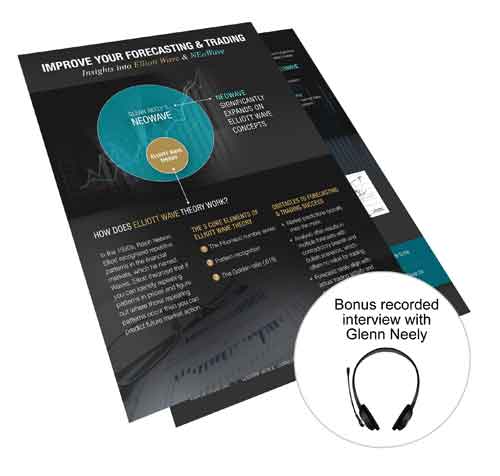
In his classic book, Mastering Elliott Wave, Glenn Neely teaches his revolutionary approach to Wave theory, called NEoWave (advanced Elliott Wave). Continuously in print since its publication in 1990, this groundbreaking book changed Wave theory forever thanks to these scientific, objective, and logical enhancements to Wave forecasting. Step-by-step, Mr. Neely explains his advanced techniques and new discoveries.
Start reading chapter 1 below...
Identifying the severity of "burning blood" helps in effective patient triage during mass casualty incidents.
: Near-infrared oximetry is often used to record prefrontal cortex oxygenation and blood volume during heat stress. III. Biochemical Markers and Triage
: Clinicians utilize standardized formulas to calculate massive fluid requirements based on Total Burn Surface Area (TBSA).
💡 : The "P1" phase of burn management is defined by the struggle to maintain blood volume and prevent the systemic consequences of rapid RBC destruction and fluid loss. If you'd like to narrow this down for your paper, Biochemical analysis of heat-damaged hemoglobin? Case studies on mass casualty burn triage?
: Elevated serum lactate is a key marker of anaerobic metabolism and poor systemic perfusion.
The primary goal in the early phase (P1) is maintaining tissue perfusion to prevent organ failure.
: Thermal injury disrupts the coagulation cascade, often leading to a hypercoagulable state or disseminated intravascular coagulation (DIC) in extreme cases. II. Fluid Resuscitation and Blood Flow
: A "cytokine storm" (marked by high IL-6 and TNF-α) typically begins immediately following the burn, altering blood chemistry significantly.
Identifying the severity of "burning blood" helps in effective patient triage during mass casualty incidents.
: Near-infrared oximetry is often used to record prefrontal cortex oxygenation and blood volume during heat stress. III. Biochemical Markers and Triage
: Clinicians utilize standardized formulas to calculate massive fluid requirements based on Total Burn Surface Area (TBSA). burning blood p1
💡 : The "P1" phase of burn management is defined by the struggle to maintain blood volume and prevent the systemic consequences of rapid RBC destruction and fluid loss. If you'd like to narrow this down for your paper, Biochemical analysis of heat-damaged hemoglobin? Case studies on mass casualty burn triage?
: Elevated serum lactate is a key marker of anaerobic metabolism and poor systemic perfusion. Identifying the severity of "burning blood" helps in
The primary goal in the early phase (P1) is maintaining tissue perfusion to prevent organ failure.
: Thermal injury disrupts the coagulation cascade, often leading to a hypercoagulable state or disseminated intravascular coagulation (DIC) in extreme cases. II. Fluid Resuscitation and Blood Flow Case studies on mass casualty burn triage
: A "cytokine storm" (marked by high IL-6 and TNF-α) typically begins immediately following the burn, altering blood chemistry significantly.