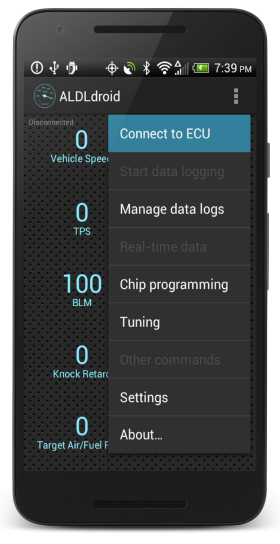
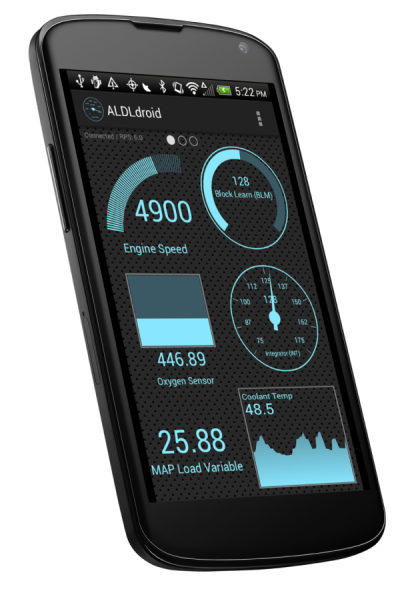
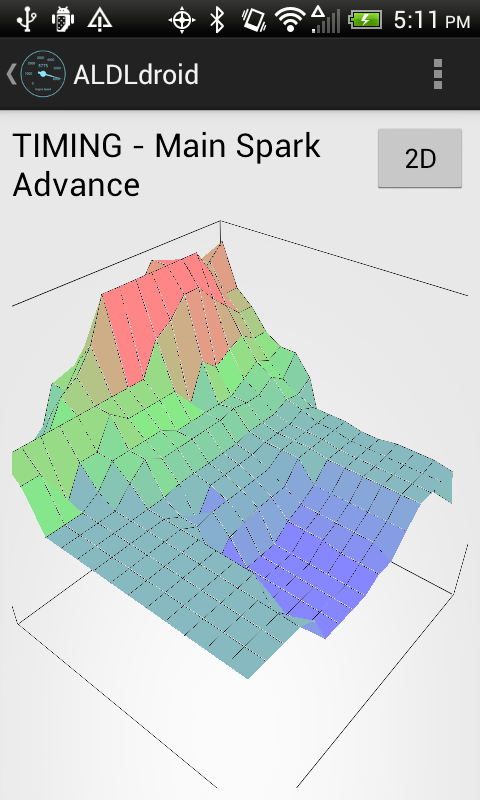
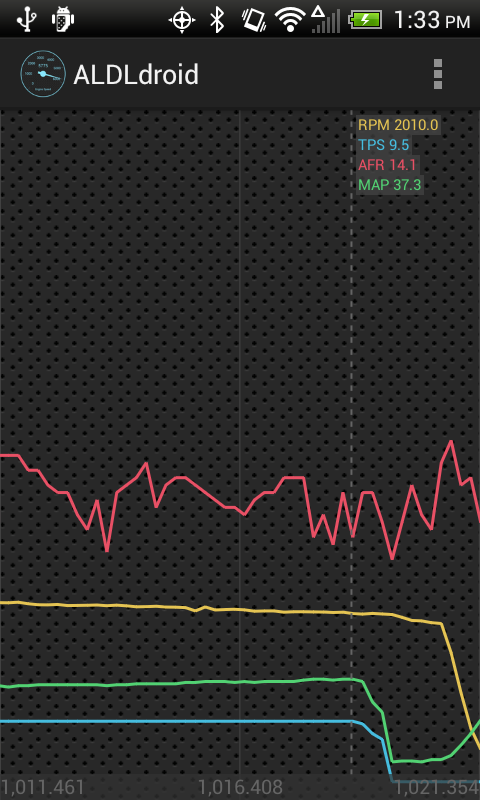
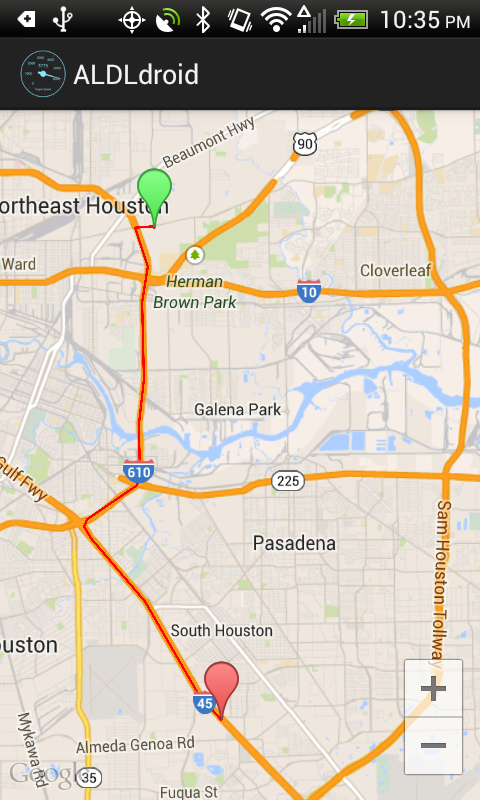
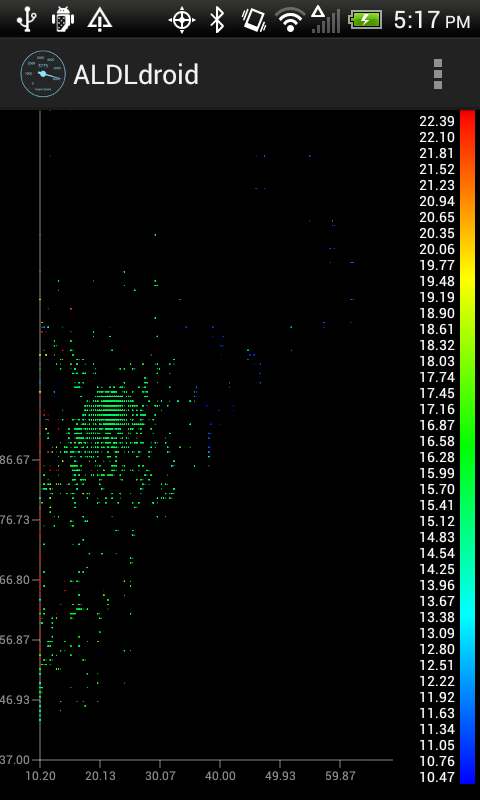
While the application was first developed for GM OBD-I ECUs, it uses a very flexible way of parsing ECU data stream that has proven useful to a lot of other car enthusiasts such as owners of BMW, Ford, DSM (Mitsubishi), Porsche, etc. The application also includes a complete tuning interface as well as data log file viewers which are in the form of time series, maps and scatter plots.
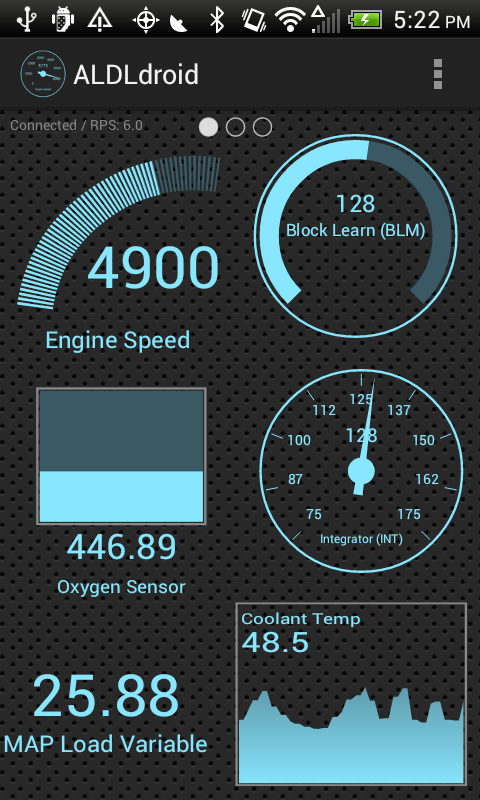
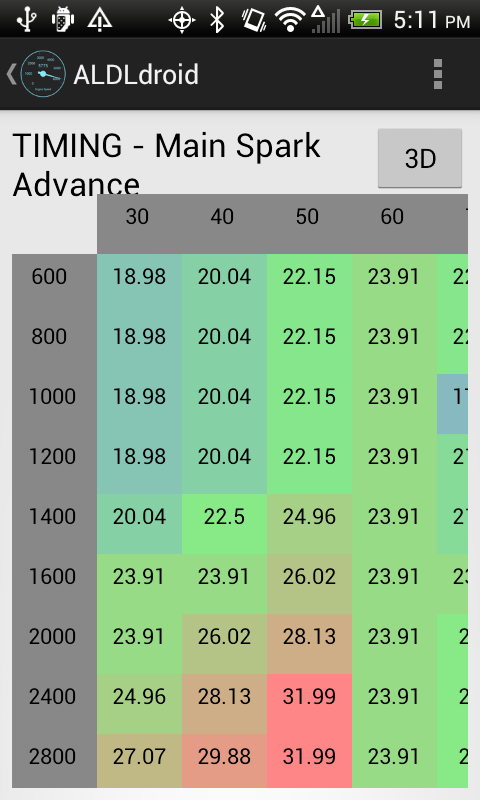
Learn More Download NowThe application has three big components: dashboards where data coming from the ECU can be displayed in various formats, a tuning section and data log file viewers.
Customize the dashboards with any indicators you want to see
Android sensors on your device are used to display useful GPS geolocation data (including speed) as well as triple axis accelerometer data (including g-force)
Display the app in your windshield to see it at a glance
Look at the data you just data logged on your phone or tablet using the build-in time series, maps or scatter plot log viewers
Tune on the fly using supported real-time tuning hardware or edit a binary file to program a chip later
We try to answer email from our customers as fast as we can, more often than not, we will answer within 24 hours
The application uses ADX and XDF files which are files from TunerPro (Windows software). These files can be found on various sites such as TunerPro Web site itself, GearHead EFI forums as well as your cars enthusiasts forums related to your specific vehicle.
Here is the easy steps that you can follow that will get you going
Find the ADX file for your vehicle. This is often the hardest part. Once your've found it, the rest is easy!
Install the ALDLdroid application from Google Play
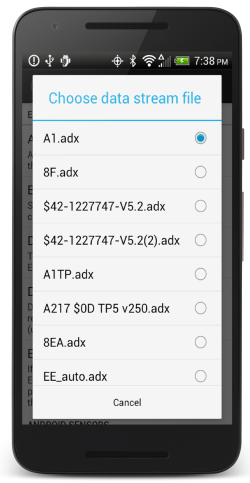
Use the Import Data stream feature of the application to import your ADX file.
Connect the ALDL cable to your vehicle diagnostic port. Hit the Connect to ECU menu in the application and watch the data come in!
The application supports various hardware that can be wired or connected wirelessly to your Android device. Here is what is currently supported:
Wired connection (USB) and wireless (Bluetooth) are both supported by the app. For Bluetooth, we suggest the Red Devil River adapters (or the 1320 electronics if you can find one used) and for USB, any FTDI (USB chip) based cable will do. :obd2allinone should have what you need.
It is possible to program chip for your ECU using the Moates BURN1 (discontinued), BURN2 as well as AutoProm.
For real-time tuning, the application currently support the Moates hardware as well. That is the Ostrich as well as the AutoProm.
If you ECU is equipped with an NVRAM module for real-time tuning, that is also supported for some ECU. Mainly Australian ECUs at this point and more can be added as required.
Some of the features described above can be seen on the screenshots below.
We love to see what our customers do with our application so here a video of Boosted & Built Garage and his pretty awesome setup.
Dawn of Sorrow also introduced , a secondary campaign that feels like a classic Castlevania throwback, and a robust "New Game+" that adds incredible replay value.
This narrative setup provides a more personal stakes than the typical "Dracula has risen again" trope. Watching Soma struggle with his inner darkness while being supported by fan-favorites like Alucard (disguised as Genya Arikado) and Julius Belmont adds a layer of emotional weight to the gothic monster-slaying. Gameplay: The Tactical Soul System 2.0
Reawakening the Night: Why Castlevania: Dawn of Sorrow Remains a Masterpiece Castlevania: Dawn of Sorrow
Picking up one year after the events of Aria of Sorrow , we return to the life of . Soma is the reincarnation of Dracula, though he has rejected his dark heritage. However, a mysterious cult led by Celia Fortner seeks to shatter Soma’s peace by creating a new Dark Lord.
The brilliance of Dawn of Sorrow lies in its . Every enemy in the game—from the lowly skeleton to the towering Gergoth—has a chance to drop their soul upon defeat. These souls grant Soma unique abilities, categorized into three types: Bullet Souls: Offensive spells or projectiles. Guardian Souls: Transformation or familiar-based support. Enchanted Souls: Passive stat boosts or utility. Dawn of Sorrow also introduced , a secondary
The soundtrack, composed by Michiru Yamane and Masahiko Kimura, is legendary. Tracks like "The Pinnacle" and "Vampire Killer" (the Julius remix) are masterclasses in synth-gothic composition, driving the player forward through the frozen peaks and bloody chapels of the castle. Legacy: The Definitive DS Experience
The DS hardware allowed for a massive quality-of-life upgrade: the top screen constantly displays your map or enemy stats, meaning you no longer have to pause the action to find your way through the sprawling castle. The "Magic Seal" Controversy Gameplay: The Tactical Soul System 2
You can’t talk about Dawn of Sorrow without mentioning the . To finish off a boss, players must use the DS stylus to draw a specific pattern on the touchscreen. While some fans found this gimmicky, it added a frantic, "do-or-die" tension to the end of grueling encounters. Missing a seal meant the boss regained health, forcing you to survive another round. Visuals and Sound
Subscribe to our email newsletter for useful tips and resources.
Copyright 2026 ALDLdroid. All Rights Reserved.