blankcard.stl for 3D printingFurthermore, the shift from physical to digital mediums has birthed a new ethical frontier. Digital files are notoriously fragile. Formats become obsolete, hard drives degrade, and cloud servers can be wiped or censored. If we do not actively maintain our digital archives, the 21st century could ironically become a "digital dark age"—a period of history with massive amounts of created data but very little surviving records. Preserving our digital footprint requires constant migration, emulation, and curation.
This is where the modern science of information organization steps in as a silent savior. Systems of classification, metadata tagging, and digital archiving are not merely clerical tasks; they are the architectural framework of modern truth. When a student accesses a clean, peer-reviewed PDF for their research, or when a scientist pulls historical climate data from a secure database, they are relying on the invisible labor of information specialists. These professionals ensure that data is not just stored, but is discoverable, verifiable, and preserved for future generations.
I cannot directly download or provide copyrighted PDF files like "LIS LNB1303." However, I can write a compelling, original essay inspired by the core themes of that document—typically associated with library science, information literacy, and the evolving role of digital archives.
The modern world is drowning in data, yet starving for wisdom. In ancient times, the burning of the Library of Alexandria was considered one of the greatest tragedies of human history because it represented the physical annihilation of irreplaceable knowledge. Today, the threat to knowledge is entirely different. We no longer fear the loss of information through fire; instead, we face the risk of losing truth in an endless, uncurated flood of digital noise. As we transition deeper into the information age, the disciplines of library science and digital archiving have become our most critical compasses.
Tell me the of the LIS LNB1303 course so I can tailor the essay to its exact concepts.
Ultimately, the study of information systems reminds us that knowledge is a living entity. It requires care, structure, and accessibility to survive. As we continue to generate zettabytes of data every year, the value of a structured archive becomes immeasurable. By mastering the art of organizing and retrieving information, we do more than just build better search engines; we protect the integrity of human progress itself.
Share the you need for this essay.
The Digital Renaissance: Navigating the Ocean of Human Knowledge
Reach us via email if you can help.
Many thanks to our supporters and contributors who have joined us in this pursuit of preserving this segment of digital history:
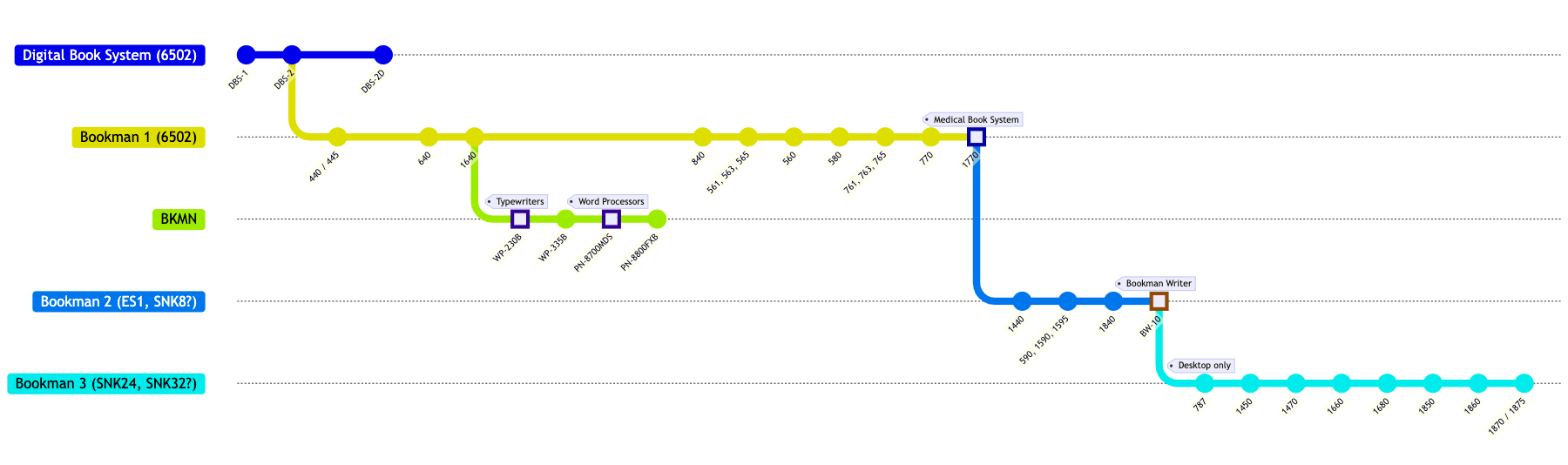
Bookman system compatibility chart coming soon.
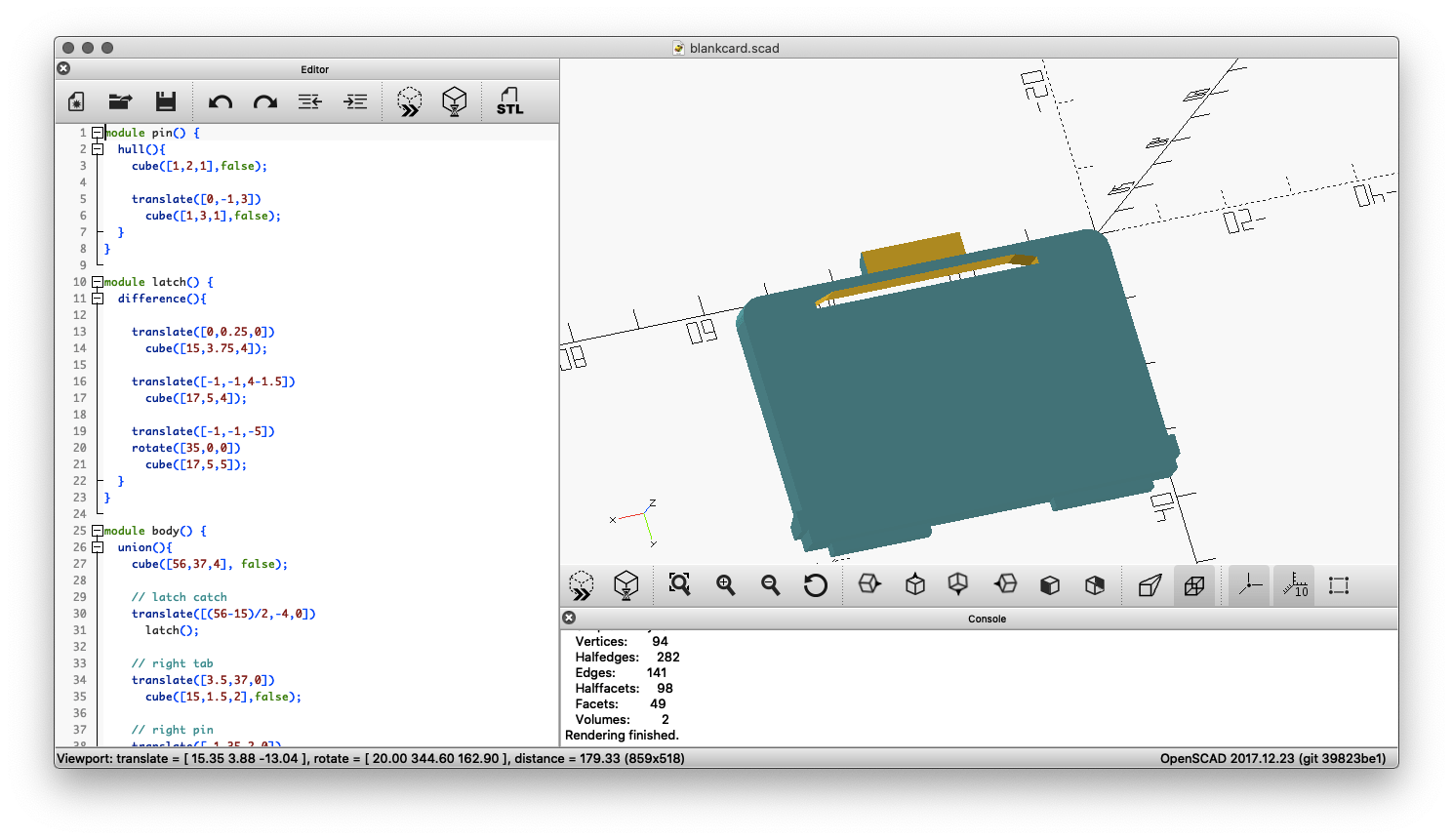
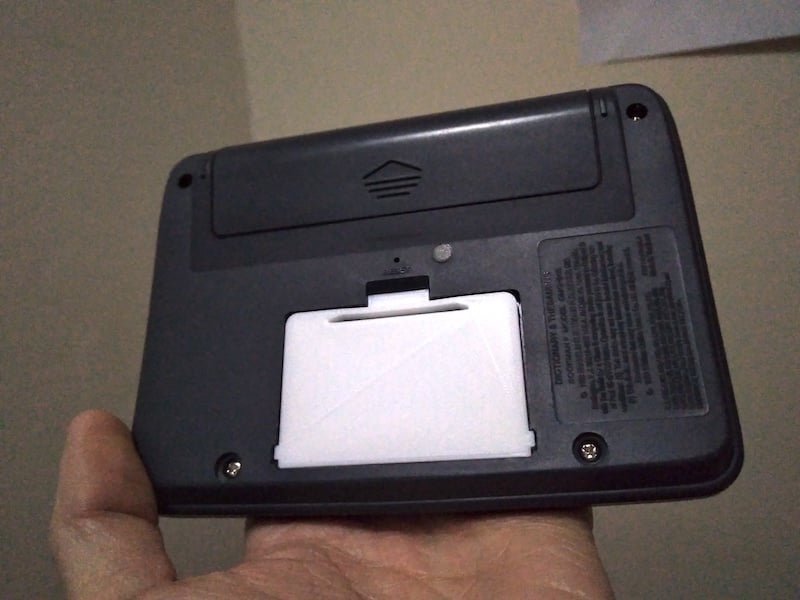
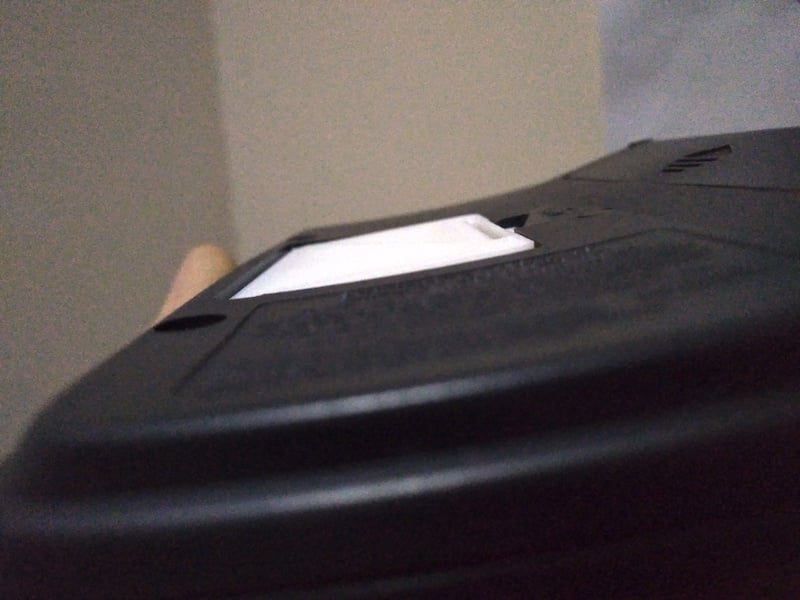
This 3D printable card blank will ensure your Bookman cartridge contact strip stays clean and sits flush with the rest of the device by filling the card slot.
|
|
|
Download blankcard.stl for 3D printing |
||
This tool is used to create replacement labels for Franklin BOOKMAN cartridges that have faded or otherwise deteriorated labelling. The generated labels are downloadable as SVG files and can be printed at 100% scale for a 1:1 reproduction size suitable for application on worn ROM cards.
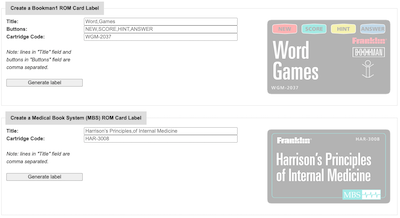
See the source code for this tool here.
You can find scans of various Franklin promotional / catalog leaflets below. Items listed in chronological order.
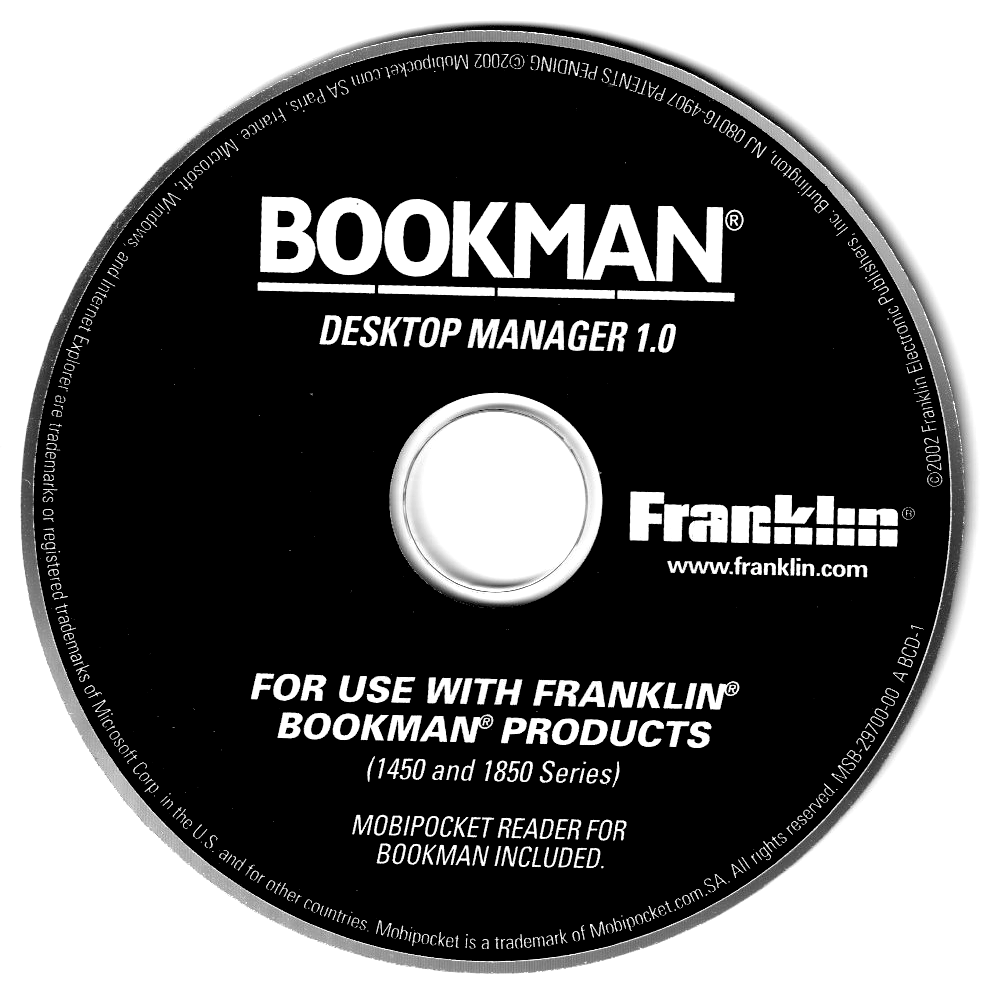
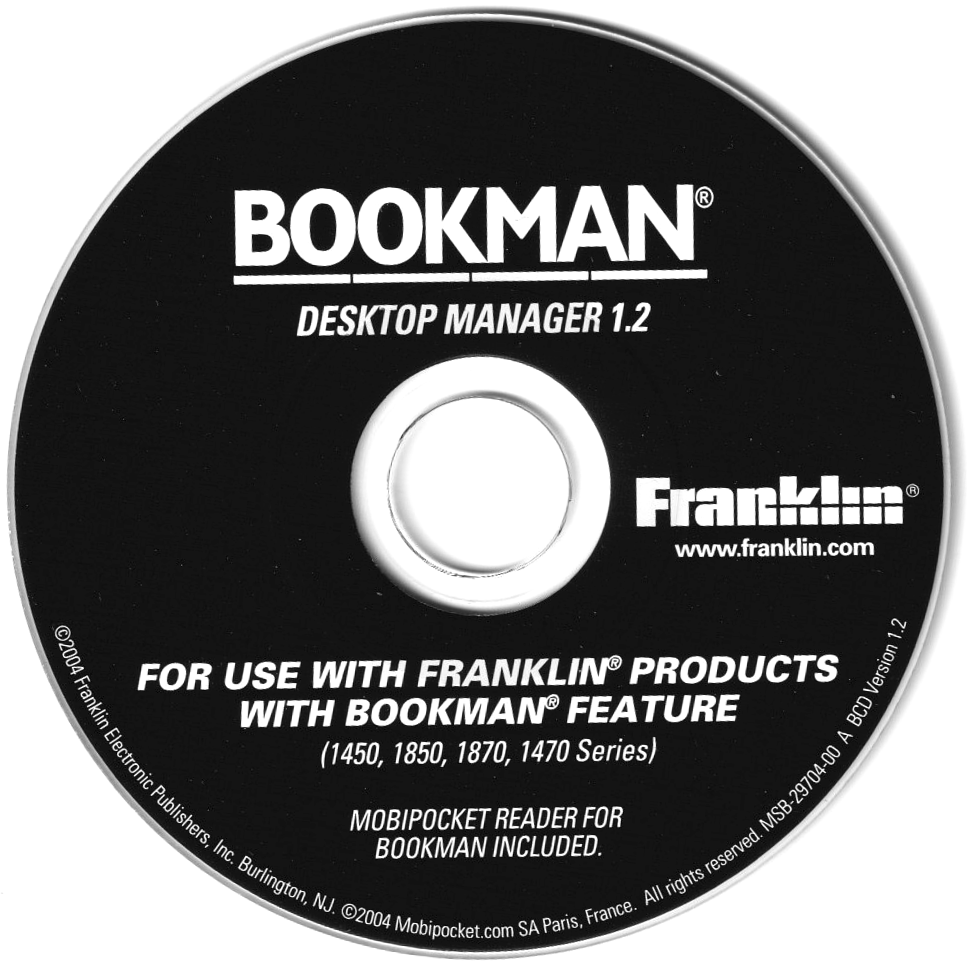
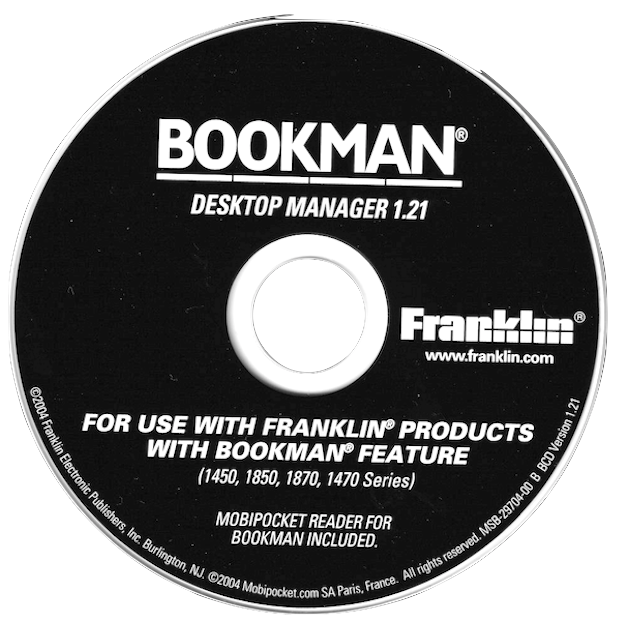
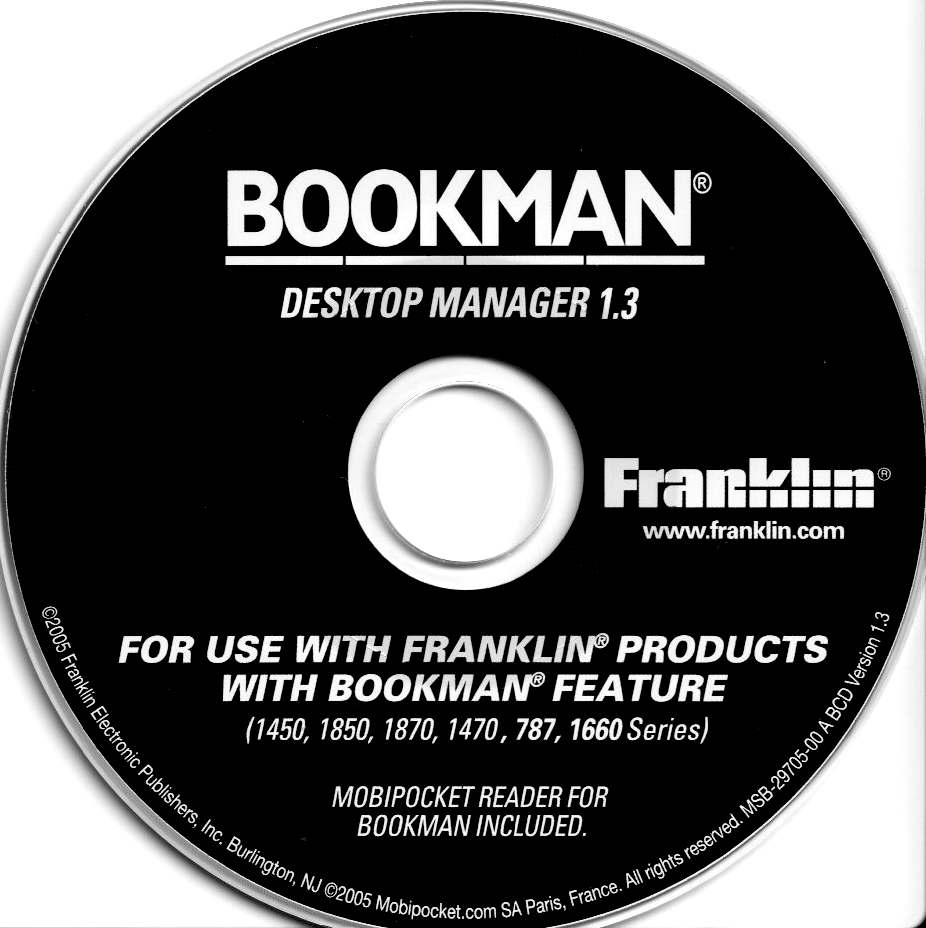
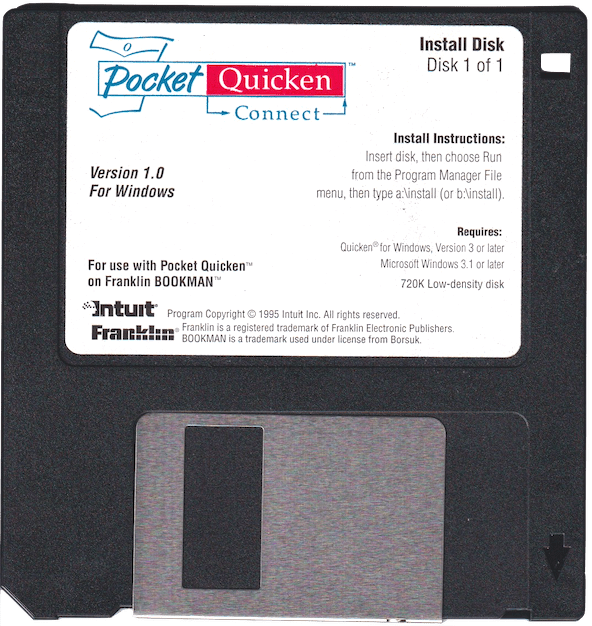
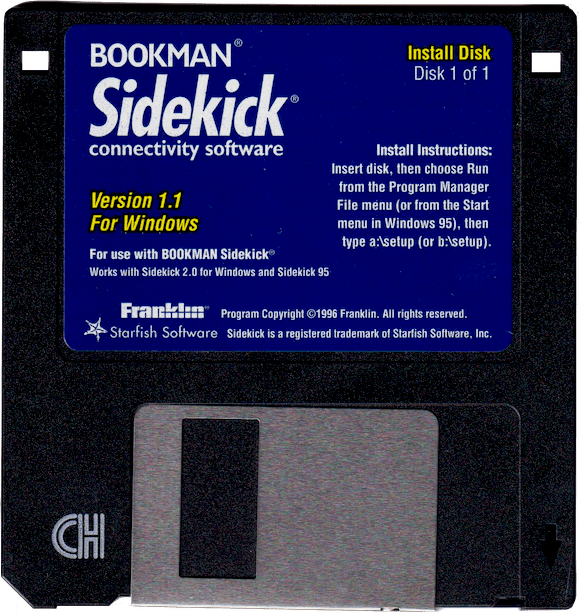
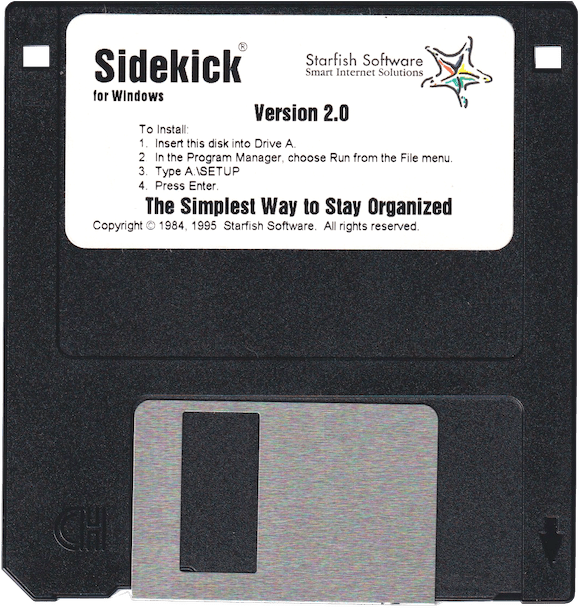
This is a collection of disk images and files of related software that came bundled as part of various Franklin DBS / Bookman devices. Click to download these files.
|
|
|
|
|
|
|
FEP received its own official number in the USB vendor code list after submitting it to the USB consortium: 0x09b2 (hex) or 2482 (dec). The submission was related to use of USB for the eBookman device.
CK2FRK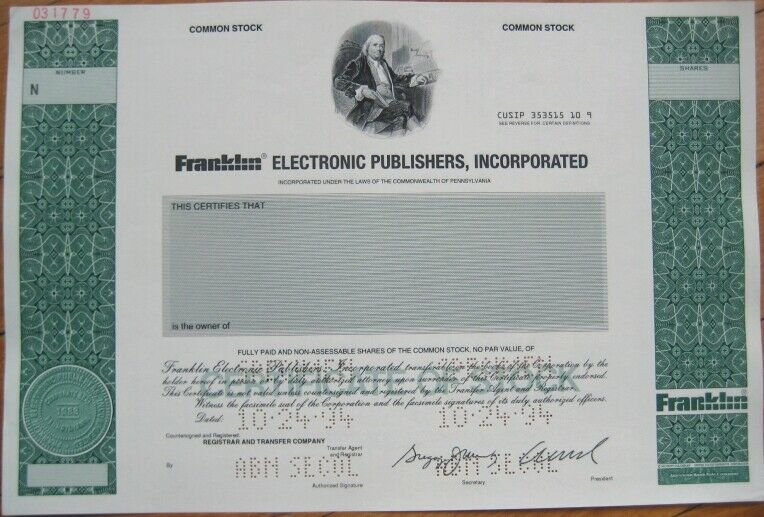
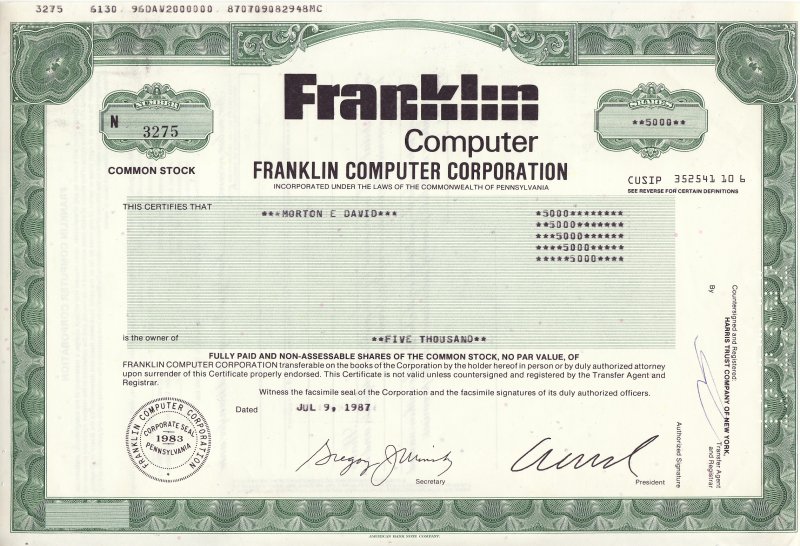
Furthermore, the shift from physical to digital mediums has birthed a new ethical frontier. Digital files are notoriously fragile. Formats become obsolete, hard drives degrade, and cloud servers can be wiped or censored. If we do not actively maintain our digital archives, the 21st century could ironically become a "digital dark age"—a period of history with massive amounts of created data but very little surviving records. Preserving our digital footprint requires constant migration, emulation, and curation.
This is where the modern science of information organization steps in as a silent savior. Systems of classification, metadata tagging, and digital archiving are not merely clerical tasks; they are the architectural framework of modern truth. When a student accesses a clean, peer-reviewed PDF for their research, or when a scientist pulls historical climate data from a secure database, they are relying on the invisible labor of information specialists. These professionals ensure that data is not just stored, but is discoverable, verifiable, and preserved for future generations.
I cannot directly download or provide copyrighted PDF files like "LIS LNB1303." However, I can write a compelling, original essay inspired by the core themes of that document—typically associated with library science, information literacy, and the evolving role of digital archives. Download lis lnb1303 pdf
The modern world is drowning in data, yet starving for wisdom. In ancient times, the burning of the Library of Alexandria was considered one of the greatest tragedies of human history because it represented the physical annihilation of irreplaceable knowledge. Today, the threat to knowledge is entirely different. We no longer fear the loss of information through fire; instead, we face the risk of losing truth in an endless, uncurated flood of digital noise. As we transition deeper into the information age, the disciplines of library science and digital archiving have become our most critical compasses.
Tell me the of the LIS LNB1303 course so I can tailor the essay to its exact concepts. Furthermore, the shift from physical to digital mediums
Ultimately, the study of information systems reminds us that knowledge is a living entity. It requires care, structure, and accessibility to survive. As we continue to generate zettabytes of data every year, the value of a structured archive becomes immeasurable. By mastering the art of organizing and retrieving information, we do more than just build better search engines; we protect the integrity of human progress itself.
Share the you need for this essay.
The Digital Renaissance: Navigating the Ocean of Human Knowledge
Did you find this topic interesting? Check out other projects like this one!