While it did not achieve the mainstream status of major franchises, Guilstein remains a significant piece for enthusiasts of the "Bio-Blood Society" subgenre. It serves as a stark reminder of the ethical dangers inherent in unchecked scientific advancement, portraying a world where the preservation of one’s humanity is the ultimate act of rebellion. Guilstein (2002) - IMDb
: After being forcibly turned into a Guilstein as punishment for whistleblowing, Chous escapes and joins a resistance group called Angara. Guilstein
The central premise of Guilstein is set in the year 2088, within a world dominated by mega-corporations like Yashiro Arcology. The narrative follows Chous Distour, an employee who becomes a victim of his own company’s "Caduceus Project". This project, ostensibly aimed at evolution, instead transforms living beings into "Guilstein"—monstrous, soulless creatures used as tools of enforcement or discarded as bio-waste. While it did not achieve the mainstream status
: Much like its contemporary, Ghost in the Shell , the film questions what remains of a person once their biological "soul" has been stripped away or mutated by technology. Visual and Narrative Style The central premise of Guilstein is set in
In the landscape of early 2000s Japanese science fiction, the film (2002) stands as a dark, cautionary exploration of biotechnology and the erosion of the human soul. Directed by Tsuneo Tominaga and based on a manga by Tamaki Hisao, the story delves into a dystopian future where the boundary between human and monster is violently blurred through corporate greed and unethical experimentation. The Bio-Horror of 2088
The film is noted for its gritty aesthetic, utilizing a blend of 2D and early 3D animation to depict its grotesque monster designs, which were overseen by renowned artist Yasushi Nirasawa. This visual style emphasizes the "body horror" aspect of the transformation, reflecting a dark future where humanity is literally consumed by industrial progress. Legacy in the Genre
New Version 26.1: Go Speed Racer Go
New Version 25.12: Higher & Higher
New Version 25.10: Please Mr. Please
New Version 25.07: Hot Hot Hot
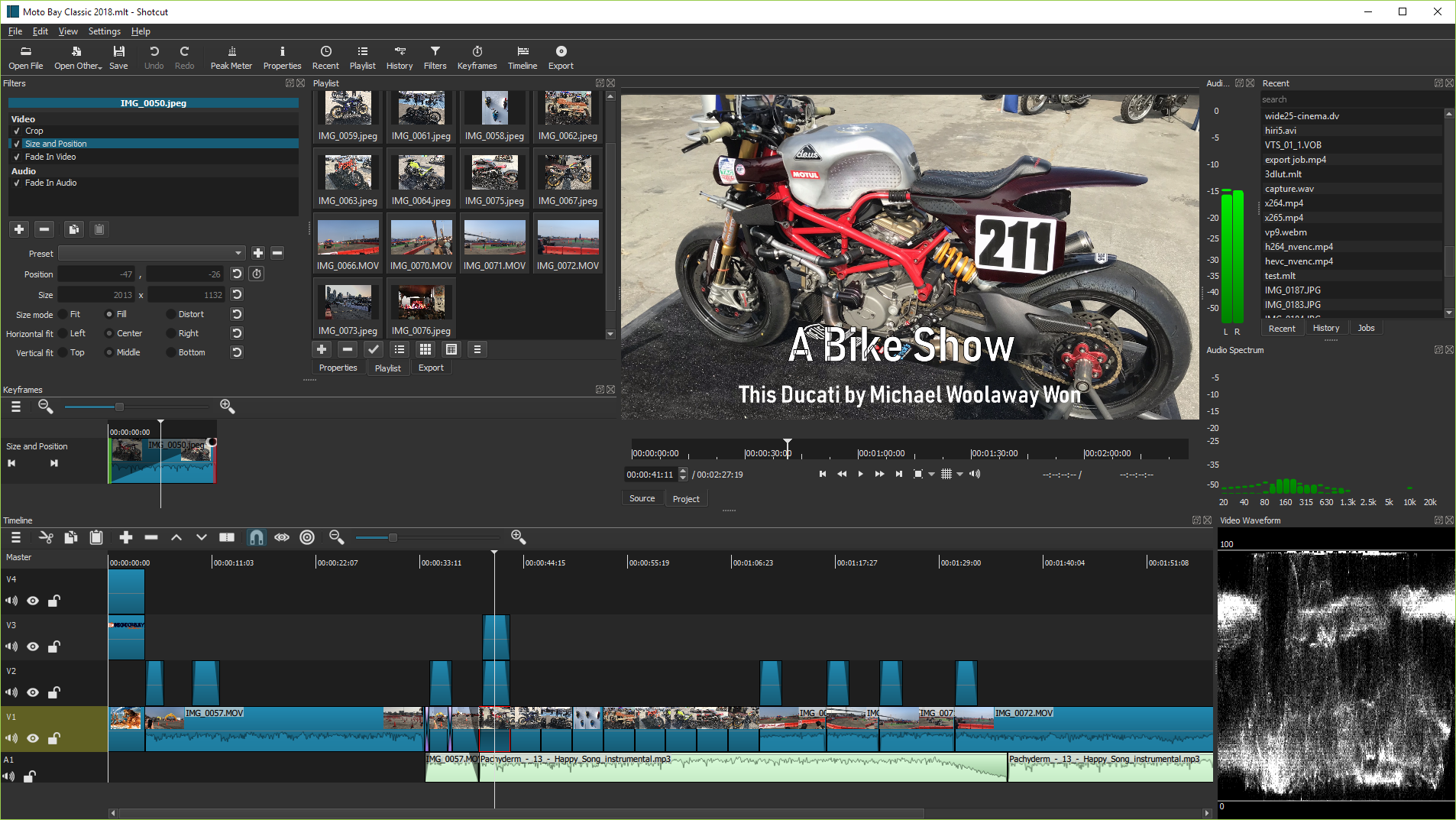
Shotcut was originally conceived in November, 2004 by Charlie Yates, an MLT co-founder and the original lead developer (see the original website). The current version of Shotcut is a complete rewrite by Dan Dennedy, another MLT co-founder and its current lead. Dan wanted to create a new editor based on MLT and he chose to reuse the Shotcut name since he liked it so much. He wanted to make something to exercise the new cross-platform capabilities of MLT especially in conjunction with the WebVfx and Movit plugins.
Lead Developer of Shotcut and MLT