
Yet, "Once upon a time" also suggests the London of the 1960s, a city that suddenly traded its gray, post-war austerity for the vibrant colors of Carnaby Street. It became the global capital of cool, where the music of The Beatles and The Rolling Stones provided the soundtrack to a social revolution. This era transformed London from a stoic fortress of tradition into a laboratory for fashion, art, and rebellion. The city didn't just change its look; it changed its soul, proving that it could be as youthful and daring as it was ancient.

"Once upon a time in London" isn't just a nostalgic look at the past; it is an acknowledgement that London is a story that never ends. It is a place of constant arrival and departure, a city that belongs to everyone and no one, forever shifting its shape while keeping its timeless, foggy magic.

Today, London is a mosaic of these eras. You can stand on a glass balcony in a skyscraper like the Shard and look down at the Tower of London, a fortress that has stood for nearly a thousand years. The city is a living library, where every street name tells a story of a forgotten trade or a Great Fire.

In the 19th century, London was the epicenter of the world, a place where extreme wealth and harrowing poverty lived side-by-side. This was the London of Charles Dickens—a city of gaslit alleys and the "pea-souper" fogs that swallowed the Thames. It was a time of industry and empire, where the soot from coal fires blackened the grand columns of St. Paul’s Cathedral. Life was a relentless hustle, a symphony of iron wheels on cobblestones and the shouting of street vendors. To be in London then was to be at the heart of the human engine, witness to the birth of the modern world.

The phrase “Once upon a time in London” evokes a city that exists as much in the imagination as it does in geography. To speak of London’s past is to peel back layers of Roman stone, Victorian fog, and the neon pulse of the modern age. It is a city defined by its ability to reinvent itself while remaining stubbornly tethered to its ghosts.

WELCOME TO THE CHEAP BEATS

Upon A Time In London: Once

Yet, "Once upon a time" also suggests the London of the 1960s, a city that suddenly traded its gray, post-war austerity for the vibrant colors of Carnaby Street. It became the global capital of cool, where the music of The Beatles and The Rolling Stones provided the soundtrack to a social revolution. This era transformed London from a stoic fortress of tradition into a laboratory for fashion, art, and rebellion. The city didn't just change its look; it changed its soul, proving that it could be as youthful and daring as it was ancient.

"Once upon a time in London" isn't just a nostalgic look at the past; it is an acknowledgement that London is a story that never ends. It is a place of constant arrival and departure, a city that belongs to everyone and no one, forever shifting its shape while keeping its timeless, foggy magic. Once Upon a Time in London

Today, London is a mosaic of these eras. You can stand on a glass balcony in a skyscraper like the Shard and look down at the Tower of London, a fortress that has stood for nearly a thousand years. The city is a living library, where every street name tells a story of a forgotten trade or a Great Fire. Yet, "Once upon a time" also suggests the

In the 19th century, London was the epicenter of the world, a place where extreme wealth and harrowing poverty lived side-by-side. This was the London of Charles Dickens—a city of gaslit alleys and the "pea-souper" fogs that swallowed the Thames. It was a time of industry and empire, where the soot from coal fires blackened the grand columns of St. Paul’s Cathedral. Life was a relentless hustle, a symphony of iron wheels on cobblestones and the shouting of street vendors. To be in London then was to be at the heart of the human engine, witness to the birth of the modern world. The city didn't just change its look; it

The phrase “Once upon a time in London” evokes a city that exists as much in the imagination as it does in geography. To speak of London’s past is to peel back layers of Roman stone, Victorian fog, and the neon pulse of the modern age. It is a city defined by its ability to reinvent itself while remaining stubbornly tethered to its ghosts.

GONE WITH THE WIND – BUT FOUND

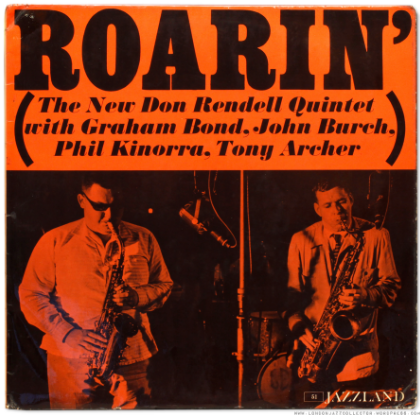
One of the problems of running The Rare Record Club is the ones that got away. One of my greatest ambitions was to put the classic Rendell-Carr Quintet albums Shades Of Blue and Dusk Fire back onto the black stuff. Sadly, this was thwarted by the company that owns this material declining to license them. As many readers will know, these albums issu…

PSYCHAMERIICA PARTT 2

The influence of hallucinogenic drugs had begun to be felt in ultra-hip musical circles from the start of the 60s, but it wasn’t until 1965 that it became explicit. Future Doors drummer John Densmore (see interview, page 54) joined a band named The Psychedelic Rangers that spring, ubiquitous Hollywood scenester Kim Fowley released his The Tri…

Luke Haines

As a younger fellow, I used to quite like the idea of subversion and (hushed tone) transgression in pop music. These days I’m not so bothered. I’m not sure that pop music has ever been particularly subversive. Has it ever had a corrupting effect, though? Yep. As a lower middle-class dweller (old skool class definitions here only) I am happy to …

Once Upon a Time in London
Diamond Publishing Ltd., 7th Floor, Vantage London, Great West Road, Brentford, TW8 9AG.
Registered in England. Company No. 04611236