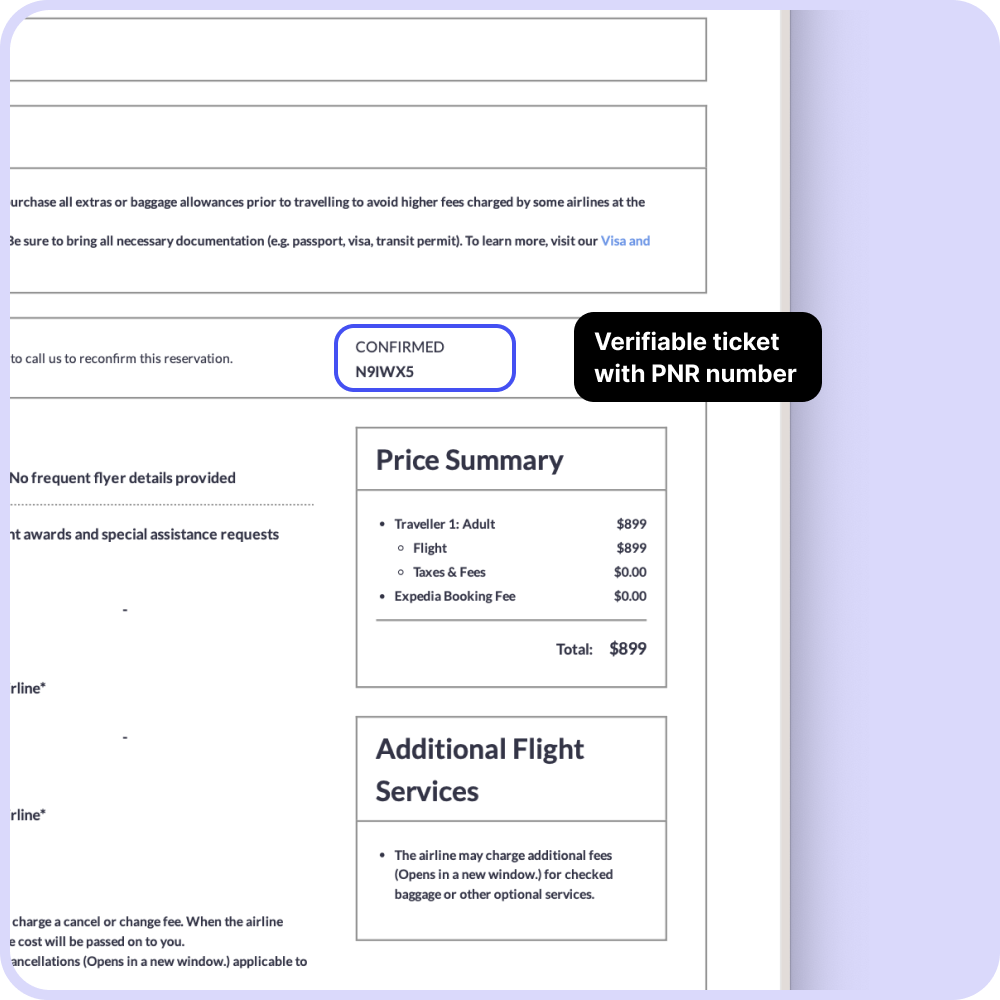
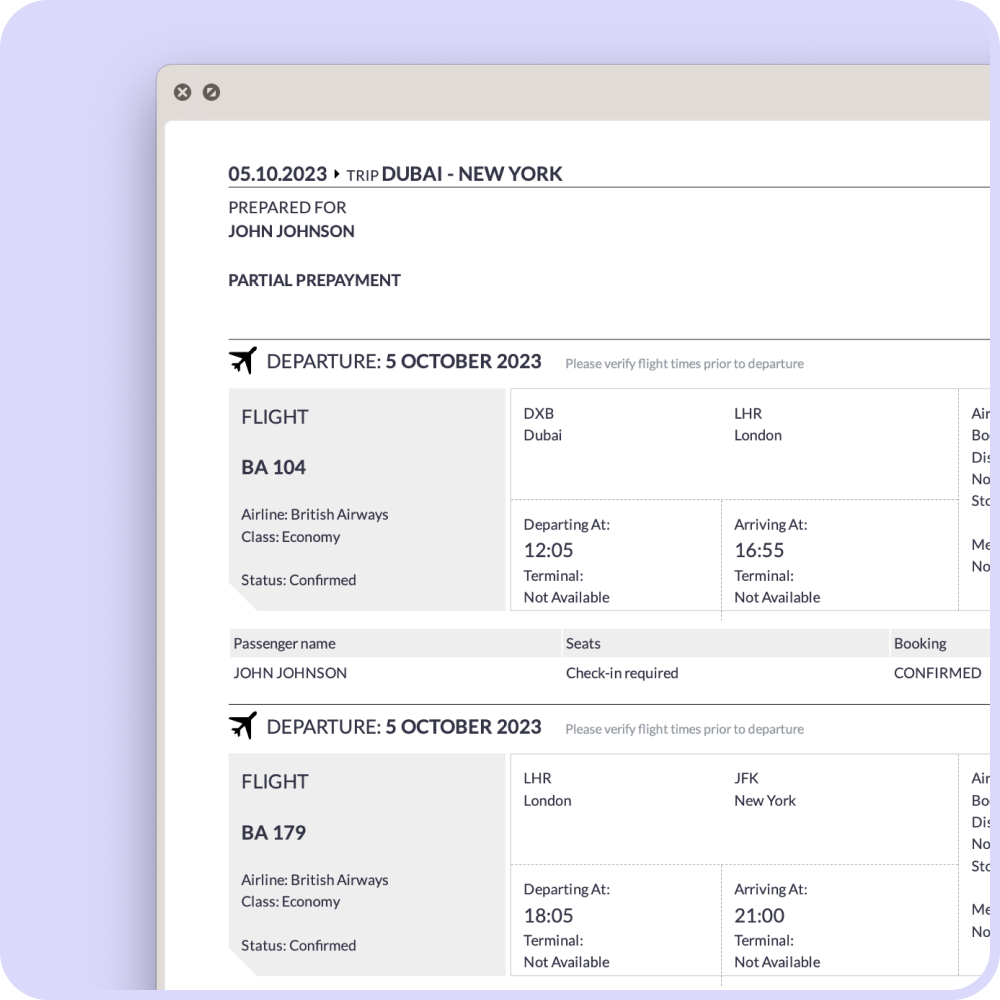
Flight bookings with a verifiable PNR number can help travelers obtain a visa and enter a country. The PNR is a unique identifier that can verify a ticket has been booked and show proof of plans to leave the country. This can help make entry into a country stress-free.
Reservation can be checked on the airline's website or GDS, such as checkmytrip.com or viewtrip.travelport.com
A sample/onward/dummy ticket is a ticket for a future flight. It looks like a real ticket, but it does not have a PNR code, meaning it is not verifiable.
In many cases, a flight reservation is an important aspect of the visa application process, as it can provide evidence that you have concrete plans to travel. By having a flight reservation, the issuing authority can better assess the applicant's intent to travel, as well as their ability to pay for the flight and other related expenses. Ultimately, a flight reservation can be a useful tool for visa applicants, as it can help demonstrate their commitment to traveling and complying with visa regulations.
It's a common requirement, and many countries require travelers to present a flight reservation or ticket for their onward journey when they arrive. This helps to demonstrate that the traveler has the financial means to pay for the journey and that they have a definite plan for their stay. It can also help authorities feel more secure in the knowledge that the traveler will not overstay their allotted time in the destination country. [S16E2] Sicarius
It's a common requirement that many organizations have when booking a business trip, as they want to make sure that you are actually scheduled to fly and that you will be present for the duration of the trip. Having a flight reservation is a way of providing this confirmation and is often used in the process of obtaining a visa or other travel documents. It's important to keep in mind that having a flight reservation does not guarantee you a seat on the flight, and you may still need to purchase a ticket to board the plane. The central brilliance of the "Sicarius" arc is
Our team of experts will work with you to ensure that your clients' flight reservations are confirmed and guaranteed, giving you the peace of mind that comes with a successful visa application. Our fast and efficient service means that you can quickly and easily secure the flight reservations you need, without any hassle. Special prices coming soon. This episode highlights the terrifying reality of a
The central brilliance of the "Sicarius" arc is the shift from a physical hunt to a digital one. Elias Voit is not merely a killer; he is a facilitator. By establishing a sophisticated network of "kill kits" and providing blueprints for other aspiring murderers during the COVID-19 pandemic, Voit acted as a dark mentor. This episode highlights the terrifying reality of a "serial killer pandemic," where isolation and digital connectivity allowed a singular predator to multiply his impact without ever leaving his home. Domesticity vs. Depravity
The Shadow of Sicarius: Legacy and Moral Ambiguity In the sixteenth season of the long-running procedural Criminal Minds , the introduction of Elias Voit—codenamed "Sicarius"—redefined the show’s traditional formula. Episode 2, titled "Sicarius," serves as a chilling deep dive into the architecture of a modern monster, illustrating how the digital age has evolved the nature of serial killing from a solitary act into a managed network. The Architect of the Network
One of the most unsettling elements explored in this episode is the juxtaposition of Voit’s normalcy with his hidden life. Unlike many previous "Unsubs" who were depicted as socially fringe characters, Voit is a family man. The tension in "Sicarius" often stems from his ability to pivot between being a doting father and a cold-blooded tactician. This duality challenges the BAU’s profiling techniques, forcing them to look for someone who fits perfectly into the suburban fabric rather than someone who stands out from it. The BAU Under Pressure
The "Sicarius" episode of Season 16 is a masterclass in modernizing the procedural thriller. It moves away from the "monster of the week" trope to build a season-long antagonist who represents the darkest corners of human ingenuity. By focusing on the intersection of technology and psychology, the episode leaves the audience with a haunting question: in a world where we are all connected, how do you catch someone who has taught the world how to hide?
For the team, "Sicarius" represents a period of extreme vulnerability. Operating with limited resources and under the shadow of a skeptical bureaucracy, the BAU (Behavioral Analysis Unit) is forced to confront their own exhaustion. The episode emphasizes the intellectual chess match between David Rossi and Voit. Rossi’s obsession with the case reflects the high stakes; he isn't just hunting a man, he’s hunting a legacy of death that has the potential to outlive its creator. Conclusion
The central brilliance of the "Sicarius" arc is the shift from a physical hunt to a digital one. Elias Voit is not merely a killer; he is a facilitator. By establishing a sophisticated network of "kill kits" and providing blueprints for other aspiring murderers during the COVID-19 pandemic, Voit acted as a dark mentor. This episode highlights the terrifying reality of a "serial killer pandemic," where isolation and digital connectivity allowed a singular predator to multiply his impact without ever leaving his home. Domesticity vs. Depravity
The Shadow of Sicarius: Legacy and Moral Ambiguity In the sixteenth season of the long-running procedural Criminal Minds , the introduction of Elias Voit—codenamed "Sicarius"—redefined the show’s traditional formula. Episode 2, titled "Sicarius," serves as a chilling deep dive into the architecture of a modern monster, illustrating how the digital age has evolved the nature of serial killing from a solitary act into a managed network. The Architect of the Network
One of the most unsettling elements explored in this episode is the juxtaposition of Voit’s normalcy with his hidden life. Unlike many previous "Unsubs" who were depicted as socially fringe characters, Voit is a family man. The tension in "Sicarius" often stems from his ability to pivot between being a doting father and a cold-blooded tactician. This duality challenges the BAU’s profiling techniques, forcing them to look for someone who fits perfectly into the suburban fabric rather than someone who stands out from it. The BAU Under Pressure
The "Sicarius" episode of Season 16 is a masterclass in modernizing the procedural thriller. It moves away from the "monster of the week" trope to build a season-long antagonist who represents the darkest corners of human ingenuity. By focusing on the intersection of technology and psychology, the episode leaves the audience with a haunting question: in a world where we are all connected, how do you catch someone who has taught the world how to hide?
For the team, "Sicarius" represents a period of extreme vulnerability. Operating with limited resources and under the shadow of a skeptical bureaucracy, the BAU (Behavioral Analysis Unit) is forced to confront their own exhaustion. The episode emphasizes the intellectual chess match between David Rossi and Voit. Rossi’s obsession with the case reflects the high stakes; he isn't just hunting a man, he’s hunting a legacy of death that has the potential to outlive its creator. Conclusion