: Because they are part of the DOM, SVG elements can respond to user inputs like hover or click events via CSS or JavaScript. Practical Implementation Tips
: HTML5 allows you to place tags directly into your markup. This makes the internal parts of the SVG accessible to the Document Object Model (DOM) for styling and scripting.
: SVG code is text-based (XML), making it extremely SEO-friendly and generally resulting in smaller file sizes for icons and illustrations compared to raster images.
: HTML5 and CSS3 support complex SVG features like clipping paths for defining visible regions and masks for intricate transparency effects.
: Graphics editors often generate bloated code ; always simplify paths and optimize your SVG files to prevent performance lag on complex graphics.
Using with HTML5 and CSS3 transforms static graphics into dynamic, interactive components of the web platform. By embedding SVG directly into HTML5, you can style individual graphic elements (like paths and circles) using standard CSS, just as you would with HTML tags. Core Integration Techniques
: Use the viewBox attribute and CSS to ensure graphics scale perfectly across all screen sizes without losing quality. Key Benefits
STRAIN VISUALIZATION
Cauchy strain or engineering strain is a unitless measurement of how much a material is being stretched or compressed under load.
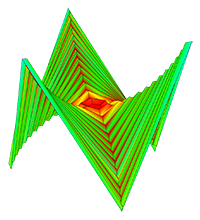
The Strain Visualization illustrates the strain across an origami sheet by mapping it to a color from blue (no strain) to red (max strain).